Brief Introduction
Angina pressure points are a natural way to help manage chest pain caused by decreased oxygen supply to the heart. Angina attacks, characterized by chest pain from decreased oxygen supply to the heart, are often due to spasms or blockages in the coronary arteries. This pain frequently radiates to the left shoulder and arm, sometimes reaching the little finger. Pressure point therapy can help manage these symptoms alongside lifestyle changes like a low-fat diet and stress reduction. Seek medical attention immediately if you feel pain in your chest or are experiencing your first angina attack and are not currently under a doctor’s care for a heart condition. Angina is a serious warning sign that should not be ignored.
⚠ Medical Warning
Pressure Points Guide does not offer medical advice. Any information provided on this site should not be construed as medical advice. Pressure Points Guide provides information on alternative and holistic techniques for pain relief and wellness. Results may vary depending on the condition and individual differences, and guides may not work for everyone. Always consult a licensed healthcare professional before starting any new treatment or using pressure points for health concerns.
Click To View Angina Pressure Points
Pc 4 — Cleft Gate
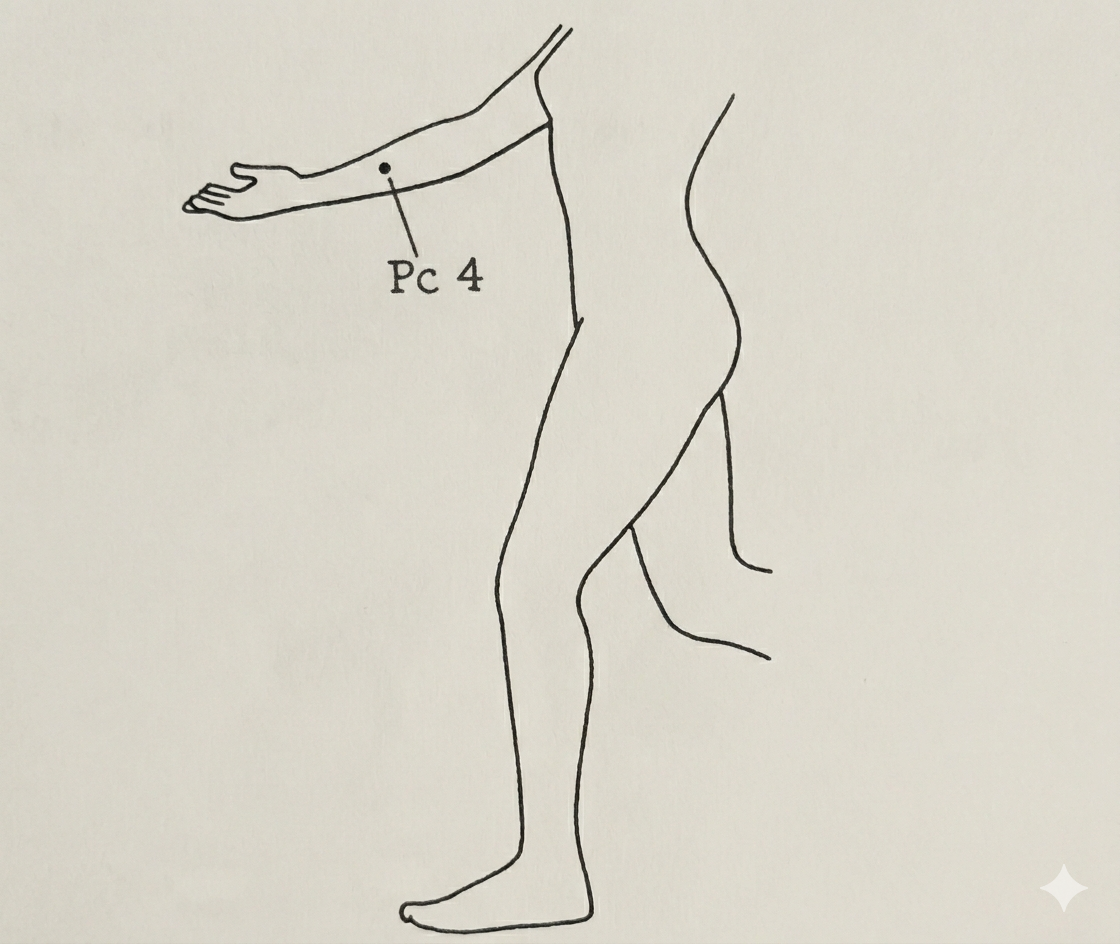
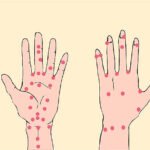
Location: Palm side of the arm, one thumb width toward the wrist from the midpoint between the wrist and elbow crease, centered on the arm.
How to apply: Use medium pressure for about one minute. For acute discomfort, repeat several times. Work both arms.
 Unlock Full Guide
What Is Angina?
Angina is chest pain caused by a decrease in oxygen supply to the heart — a warning sign that the heart muscle is not getting the oxygen it needs to function properly.
What Causes Angina?
Pain is triggered by blockages or spasms in the coronary arteries. Key underlying factors include:
- Atherosclerosis: Fatty plaque narrows the arteries and restricts blood flow.
- Carbon Monoxide: Smoking displaces oxygen in the blood, starving the heart.
- Physical or Emotional Stress: Sudden exertion or anger are common attack triggers.
Symptoms of Angina
- Chest Pain: Acute pressure or discomfort in the chest.
- Radiating Pain: Often spreads to the shoulder and left arm, sometimes reaching the little finger.
- Secondary Signs: Heart palpitations and irregular heartbeat in the same areas.
Body Systems Involved
- Cardiovascular: The heart and coronary arteries.
- Respiratory: Oxygen and carbon monoxide exchange.
- Energy Meridians: The Heart Meridian (armpit to little finger) and Pericardium Meridian (center of inner arm).
Risk Factors
- Diet: High-fat foods that build arterial plaque.
- Smoking: Equally to blame as diet for oxygen deprivation to the heart.
- Lifestyle: Sedentary habits and chronic high stress.
- Age: Being over 40 or having a pre-existing heart condition warrants closer medical supervision.
Diet & Lifestyle Support
- The 10% Fat Rule: Limiting fat to 10% of total calories and focusing on fruits, vegetables, oats, rice, and wheat shows significant benefit for heart patients.
- Stress Management: 15–20 minutes of daily meditation or relaxation helps prevent emotionally triggered attacks.
- Gradual Exercise: A physician-supervised program is essential for safely strengthening the heart.
- Quit Smoking: Cessation can cut the angina death rate in half.
- Yoga: Poses like the Cobra, Locust, and Spinal Twist can stretch coronary arteries and improve circulation.
When to Seek Emergency Care
Call emergency services immediately if:
- This is your first angina attack.
- You are not under a physician’s care for a heart condition.
- The pain is intense, worsening, or not relieved by rest.
Note: Prompt treatment significantly improves recovery outcomes compared to delaying care even by a few hours.
Additional Natural Remedies
Hawthorn Berry: A leading cardiac antioxidant used in both Eastern and Western medicine to support heart health.
Yoga: Gentle poses like the Sun Salutation, Cobra, and Locust can stretch the coronary arteries and increase blood supply to the heart. Always consult your doctor before starting.
This information is for educational purposes only and is not intended to replace professional medical advice. Always consult your physician before beginning any new treatment or exercise regimen.