Frequently asked Questions on Pressure Points
What is Pressure Point Therapy?
Pressure point therapy is an ancient healing practice that uses gentle but focused finger pressure on specific points of the body to stimulate its natural ability to heal. It is based on the understanding that the body is an energy system, and that physical or emotional imbalance occurs when this energy becomes blocked or disrupted. By applying pressure to key points, the flow of energy can be restored, helping the body regain harmony and balance.
Although pressure point therapy is most commonly linked to East Asian traditions, it has roots across the world. In China it evolved into Acupressure; in Japan it became Shiatsu; in India it connected deeply with yoga and Ayurvedic concepts of prana; and in Europe and the United States it influenced the development of Reflexology. Across all of these cultures, early healers recognised that stimulating certain points on the body could influence organs, nerves, circulation, and overall well-being.
Pressure point therapy has been used for thousands of years to relieve pain, calm tension, and support emotional and physical health. Because it relies only on the hands—no needles, equipment, or medicine—it remains one of the most accessible forms of natural healing.
Benefits of Pressure Point Therapy
People use Pressure Point Therapy to support their health in many ways. Applying pressure to the right points can:
-
Improve circulation, helping the body move oxygen and nutrients more efficiently while clearing out waste and tension.
-
Ease muscle tightness and reduce pain, especially in areas affected by stress, poor posture, or blocked energy.
-
Calm the nervous system, lowering stress levels and helping the body shift into a more relaxed state.
-
Support emotional balance, easing anxiety, irritability, and emotional fatigue by releasing tension held in the body.
-
Increase energy, by unblocking stagnant areas, releasing muscle knots, improving blood flow, and supporting a smoother flow of life-energy(QI).
-
May support efforts to break habits by promoting relaxation and reducing feelings of stress that can trigger cravings.
- Enhance overall well-being, because it works with the entire body—muscles, nerves, circulation, breath, emotions, and energy.
Pressure Point Therapy supports both physical and emotional health, making it a useful natural practice for everyday balance and relief.
The Cultural & Traditional Roots of Pressure Point Therapy
Pressure point techniques have been practiced for thousands of years across numerous cultures. Their exact origins are unknown, but early forms can be traced throughout:
-
China, where the foundations of meridians and Acupressure were developed
-
Japan, where pressure-based healing evolved into Shiatsu
-
India, where yogic healing traditions emphasized prana (life energy) and specific points
-
Europe and the United States, where Reflexology techniques developed to map organs onto the hands and feet
Across all these traditions, healers believed that life energy flows through the body in channels and that health depends on keeping this flow balanced and unobstructed. Pressure Point Therapy is a modern expression of this timeless idea.
Which Conditions Can Pressure Point Therapy Help?
Pressure point therapy has been used for a wide range of common conditions and everyday discomforts. Its ability to relieve tension and support natural energy flow makes it useful for both physical and emotional complaints. Conditions commonly addressed include:
Headaches and migraines, neck and shoulder tension, back pain and stiffness, joint pain and arthritis, fatigue and low energy, anxiety, stress and emotional imbalance, indigestion, constipation and digestive discomfort, sinus congestion, colds and breathing difficulties, menstrual cramps and PMS, circulation issues and fluid retention. Each condition typically has specific points that can help release tension, reduce discomfort, and support the body’s natural functions. With regular practice, many people find long-term relief from recurring symptoms.
Different Types of Pressure Point Therapy
Pressure Point Therapy appears in several well-established forms, these forms all combine together into one, modern holistic healing method:
Acupressure
Uses finger pressure on specific points along meridians to balance energy and ease discomfort.
Shiatsu
A Japanese method involving rhythmic pressure, stretching, and movement to harmonize the body’s energy flow.
Reflexology
Stimulates specific areas on the feet and hands believed to correspond to organs and body systems.
Yoga-Based Pressure Methods
Use breathwork, gentle stretching, and pressure on key points to support prana (life energy) flow and relaxation.
Pressure Point Therapy is used to help with many common issues such as pain, muscle tension, stress, fatigue, and low energy. It is also widely used to promote relaxation and improve overall wellness. It can be safely practiced by anyone, however, people with serious health concerns should use it gently and seek medical advice if unsure.
Negative Effects of Pressure Point Healing Methods
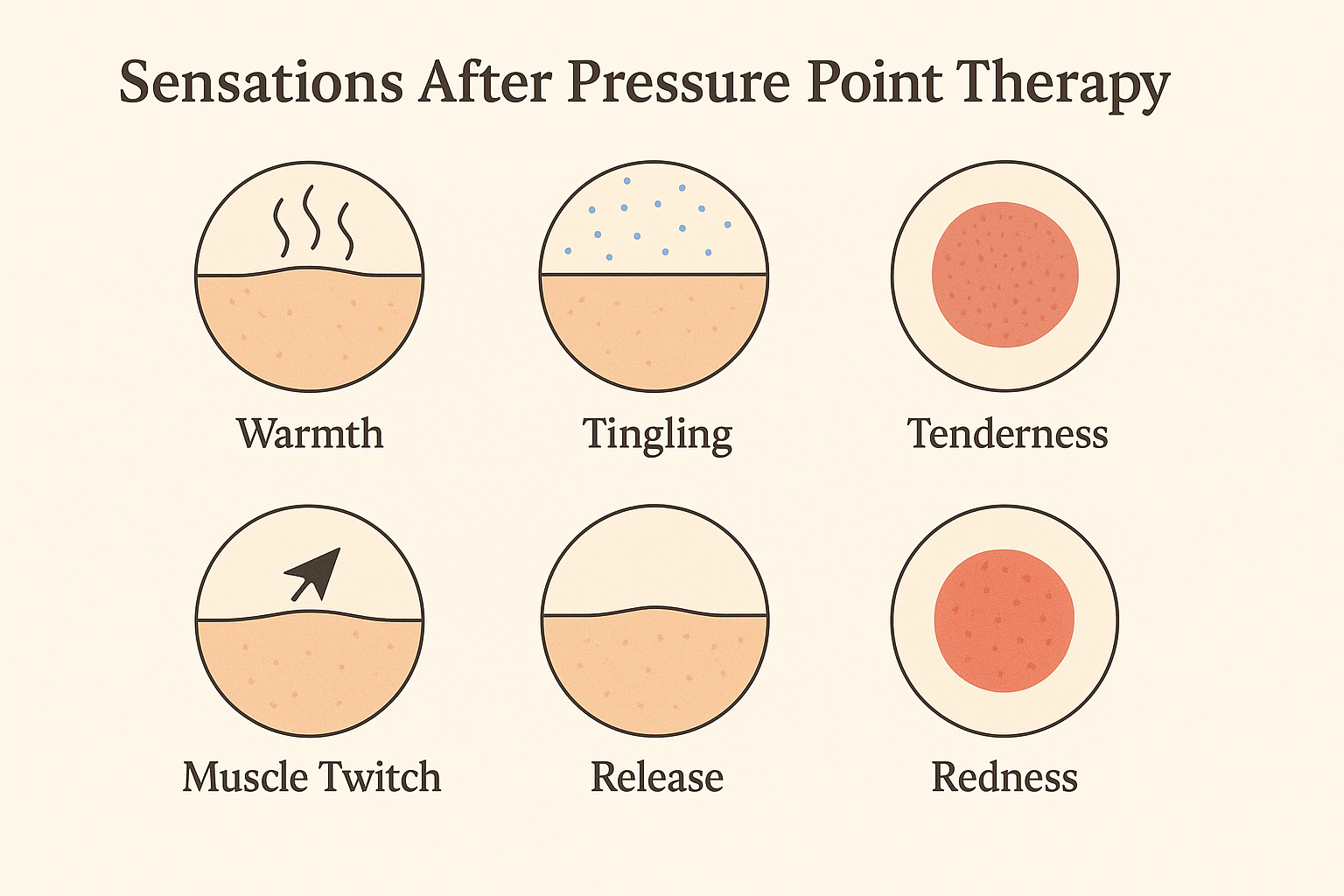
Mild soreness, tenderness, or temporary redness can occur after stimulating pressure points, especially in areas that were tense or sensitive. Sharp pain, numbness, or bruising should be avoided, as these indicate too much force or incorrect technique. Pressure point work should always be done gently, on clean and uninjured skin, using steady, comfortable pressure.
Overall, the risk of harm is low, but pressure point therapy should be practiced with awareness of basic technique and a good understanding of human anatomy to avoid irritation or overstimulation of nerves and tissues.